If your business is in Massachusetts, your electric bill is probably one of your biggest operating costs. The state has one of the highest commercial electricity rates in the continental U.S. But Massachusetts also offers one of the strongest solar incentives in the country: SMART 3.0.
Here’s what it is, how it works and what it could mean for your building.
What is SMART 3.0?
SMART stands for Solar Massachusetts Renewable Target. It’s the state’s main incentive program for solar. In simple terms:
Massachusetts pays you for the solar power your system produces, every month, for 20 years.
Payments come through your electric utility (Eversource, National Grid or Unitil). SMART 3.0 is the newest version of the program, launched in 2025.
How does it work?
- You install solar on your roof, over a parking lot or on your property.
- You enroll in SMART during the program year.
- Your system produces power, and every kilowatt-hour (kWh) earns a set payment.
- You get paid for 20 years, at a rate that’s locked in when you enroll.
Your business also saves on its electric bill, because you’re buying less power from the utility. SMART payments come on top of those savings.
How much does SMART pay?
For businesses with systems over 25 kW, the payment is figured like this:
(Base rate + any bonuses) – the value of the electricity you produce = your SMART payment per kWh
The state subtracts the value of the electricity because you’re already saving that money on your bill. SMART fills the gap so solar makes financial sense.
The base rate depends on the size of your system. Under the state’s draft 2027 rates:
- 25 to 250 kW systems, a common size for warehouses, manufacturers and office buildings, earn a base rate of about 25.5 cents per kWh.
- 250 to 500 kW systems earn about 22.1 cents per kWh.
- 500 kW to 1 MW systems earn about 27.8 cents per kWh.
- 1 to 5 MW systems earn about 21.5 cents per kWh.
These are draft rates. Final 2027 rates are expected in December.
SMART bonuses: getting paid extra
SMART pays bonuses (the state calls them “adders”) for certain kinds of projects. They raise your rate for all 20 years, and many can be combined.
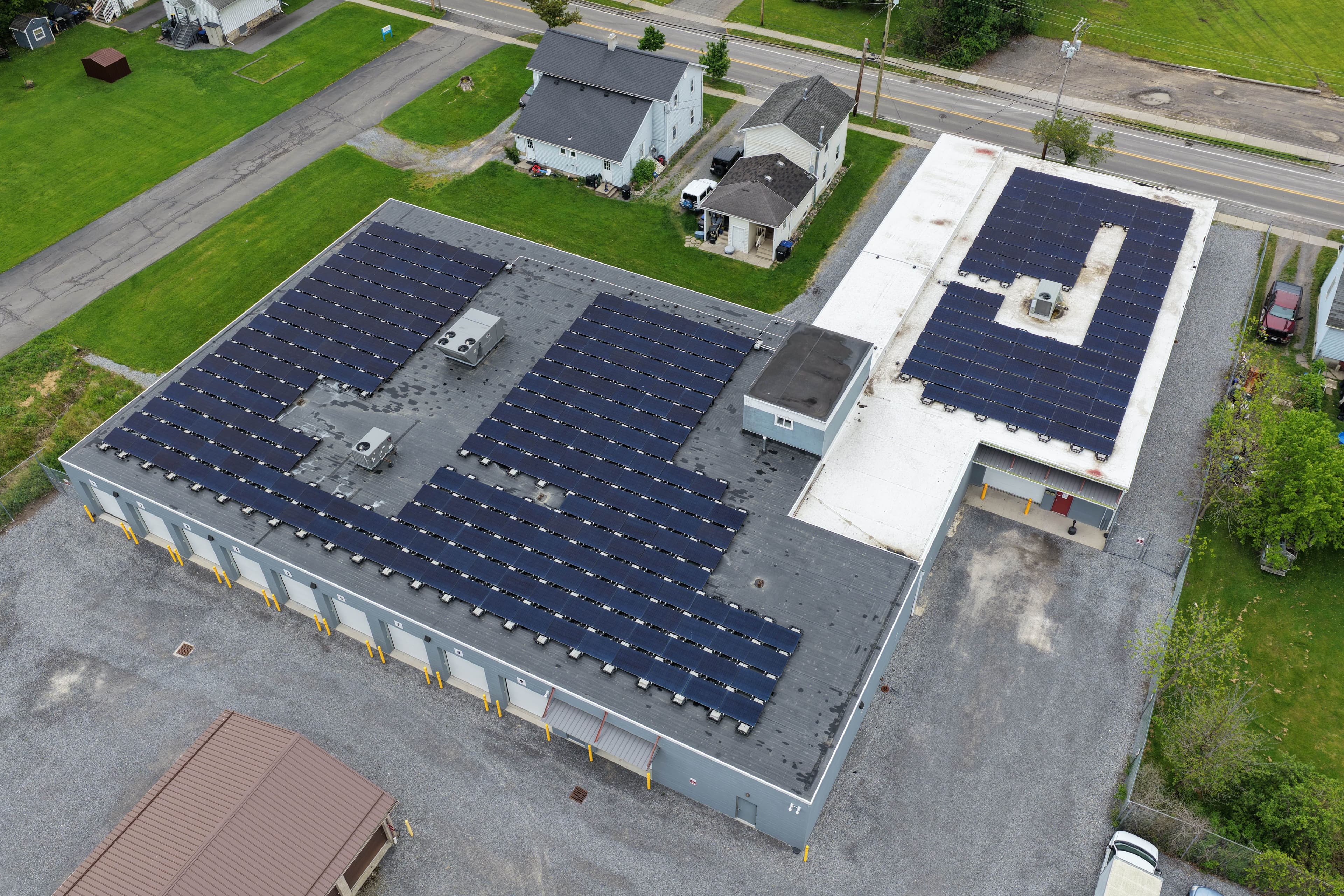
- Solar on your roof earns an extra 3 cents per kWh. Very large rooftops, 900 kW or more, earn 4 cents.
- Solar carports built over a parking lot earn one of the biggest bonuses: an extra 9 cents per kWh under the draft 2027 rates.
- Pairing solar with a battery can add up to 5 cents per kWh, depending on the size of the battery.
- Towns, schools and other public entities earn an extra 4 cents per kWh.
- Low-income properties earn an extra 6 cents per kWh.
For example, a warehouse that puts solar on its roof and adds a battery could earn both the rooftop bonus and the battery bonus, every month, for 20 years.
Good news for mid-sized businesses
Each year the state sets a limit on how much solar can enroll in SMART. But behind-the-meter systems between 25 kW and 250 kW (systems that power your own building) have not counted toward that limit. That’s a common size for warehouses, manufacturers and commercial buildings.
What’s changing in 2027
Under SMART 3.0, Massachusetts updates rates every year instead of locking them in for years at a time:
- October: the state publishes draft rates
- December: final rates are set
- January: the new program year opens (applications for 2027 open January 4, 2027)
Once your project enrolls, your rate is locked in for 20 years, even if future rates go down.
Why this matters right now
Solar is a long-term investment, and timing matters:
- SMART rates change every year. Locking in a rate now protects you from future cuts.
- The federal solar tax credit is ending. New solar projects must be up and running by December 31, 2027 to qualify.
- Batteries add more value. Pairing solar with storage can earn a SMART bonus, lower your demand charges and qualify for utility battery programs like ConnectedSolutions.
Is your building a good fit?
SMART tends to work best for businesses with:
- A large, sturdy roof or a big parking lot
- High electric bills or high demand charges
- Plans to stay in the building long-term
- Interest in backup power during outages
Get a free bill and roof review
Not sure what SMART could mean for your business? Send us 12 months of electric bills, and Buffalo Solar will show you what’s driving your costs and how solar and storage could help. It’s free and comes with no pressure.